Clocks in Two Languages: How Multilingual Brains Rewire Their Sense of Time
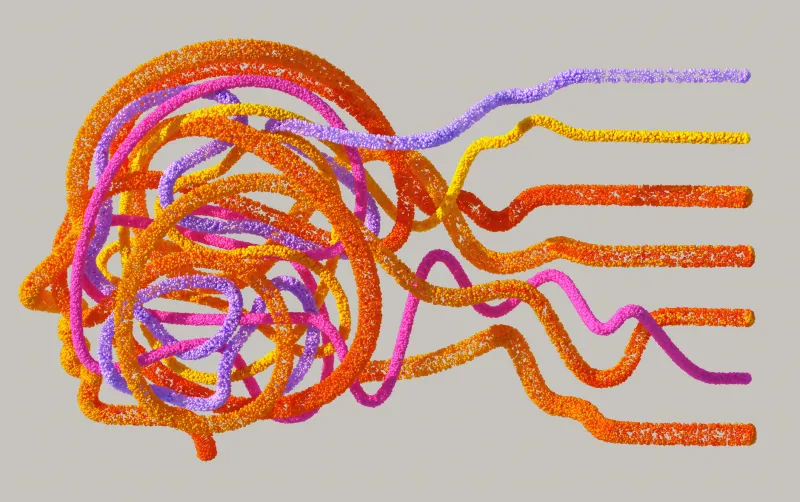
Time, it turns out, is not a universal experience. While the clock on the wall ticks at the same rate for everyone, the brain's internal representation of time—its sense of sequence, duration, and anticipation—appears to be shaped in part by the language a person speaks. For those who speak two or more languages, that shaping may be considerably more complex, and considerably more consequential, than scientists once assumed.
A growing body of neuroscience research suggests that multilingual speakers do not simply translate temporal concepts from one language to another. Instead, their brains appear to maintain parallel, and sometimes competing, frameworks for understanding time—frameworks built from the grammatical architecture of each language they know.
The Grammar of Time Is Not Universal
To appreciate why this matters, it helps to understand just how differently the world's languages encode time. English speakers operate within a rigid tense system: verbs shift form to signal whether an action occurred in the past, is happening in the present, or will unfold in the future. This structure is so deeply embedded in English grammar that speakers are essentially required to locate every action on a timeline before they can complete a sentence.
Mandarin Chinese takes an entirely different approach. Rather than mandating tense markers on verbs, Mandarin relies on aspectual markers—particles that indicate whether an action is completed, ongoing, or anticipated—alongside contextual cues and time adverbs. The language does not compel its speakers to specify when something happened with the same grammatical urgency that English does. Instead, it emphasizes the state or quality of an action.
This is not a trivial distinction. Linguistic relativity research—the study of how language influences thought—has long debated whether grammatical differences like these produce measurable differences in cognition. For temporal perception, the evidence is becoming increasingly persuasive that they do.
What Brain Imaging Reveals
Studies using functional magnetic resonance imaging (fMRI) have begun to map the neural territories activated when speakers of different languages reason about time. Researchers have found that English speakers show robust activation in regions associated with sequential processing and episodic memory when performing time-related tasks—consistent with the language's demand for explicit temporal anchoring.
Mandarin speakers, by contrast, show activation patterns that engage spatial processing networks more prominently, a finding consistent with behavioral research showing that Mandarin speakers are more likely to conceptualize time along a vertical axis (earlier events positioned above later ones) rather than the horizontal, left-to-right timeline dominant among English speakers.
For bilingual Mandarin-English speakers, the picture becomes notably more intricate. Neuroimaging studies have identified what some researchers describe as a form of neural code-switching in temporal cognition—where the brain appears to recruit different processing pathways depending on which language is contextually active, even when the task itself is nonverbal. In other words, the language a bilingual person is operating in at any given moment may quietly reconfigure how their brain experiences the present moment and anticipates the future.
Aspectual Thinking and the Flexible Brain
Beyond Mandarin and English, the diversity of temporal encoding across languages is striking. Languages such as Hopi, Turkish, and Aymara each carve up time in ways that challenge Western assumptions about past, present, and future as fixed, universal categories. Turkish, for instance, requires speakers to grammatically distinguish between events they witnessed directly and events they learned about secondhand—a feature called evidentiality that intertwines time with the reliability of memory.
Researchers studying multilingual speakers who navigate languages with such contrasting temporal grammars have noted heightened activity in the prefrontal cortex—the brain region most closely associated with executive function, planning, and cognitive flexibility. This neurological signature suggests that managing multiple temporal frameworks is not merely a linguistic juggling act; it may actively exercise and reinforce the neural circuits responsible for higher-order reasoning.
Some cognitive scientists have proposed that this repeated engagement constitutes a form of mental cross-training. Just as bilingualism has been associated with enhanced attentional control and inhibitory function—the so-called bilingual advantage in executive function—multilingual temporal processing may confer specific advantages in domains where flexible thinking about time is essential.
Implications for Decision-Making and Planning
The potential cognitive payoffs extend beyond the laboratory. Decision-making research has consistently demonstrated that how people mentally represent the future influences the quality of their choices. Individuals who can vividly and flexibly simulate future scenarios tend to make more deliberate, long-term-oriented decisions—a capacity sometimes called prospective cognition.
If multilingual speakers genuinely maintain more flexible neural architectures for temporal reasoning, this could translate into measurable advantages in prospective cognition. A person whose brain has been trained to process time through both an aspectual lens and a tense-based lens may be better equipped to consider actions from multiple temporal vantage points simultaneously—weighing not just when something will happen, but what kind of event it will be and how complete or contingent it might remain.
This hypothesis remains, for now, largely speculative. The field lacks large-scale longitudinal studies tracking multilingual individuals across diverse language pairings and measuring real-world planning outcomes. Researchers also face the persistent methodological challenge of disentangling the effects of multilingualism from confounding variables such as education, socioeconomic background, and cultural context.
A New Frontier in Neuroplasticity Research
What makes this area of inquiry particularly compelling is its intersection with neuroplasticity—the brain's well-documented capacity to physically reorganize itself in response to sustained experience. The evidence that language learning reshapes neural circuits is now substantial; the question is how deep that reshaping goes and which cognitive domains it touches.
Temporal perception sits at the heart of human consciousness. Our ability to remember the past, inhabit the present, and project ourselves into the future is foundational to identity, social coordination, and rational agency. If the grammatical structures of the languages we speak genuinely sculpt the neural machinery underlying these capacities, then multilingualism is not simply a social or professional asset—it is a form of cognitive architecture.
For language researchers and educators in the United States, where multilingualism is both widespread and chronically undervalued in public education policy, these findings carry a pointed implication. The bilingual student navigating English and Spanish, or Vietnamese and English, or Arabic and English, may be doing something far more cognitively sophisticated than simply switching between two sets of vocabulary. They may be maintaining two distinct models of time itself—and in doing so, building a brain that is measurably more adaptable to the demands of an uncertain future.
The clock, it seems, does not tick the same way for everyone. And for those who live between languages, it may tick in ways that offer advantages science is only beginning to measure.