Fossils in the Atlas: Seven U.S. Place Names That Preserve Ancestral Languages
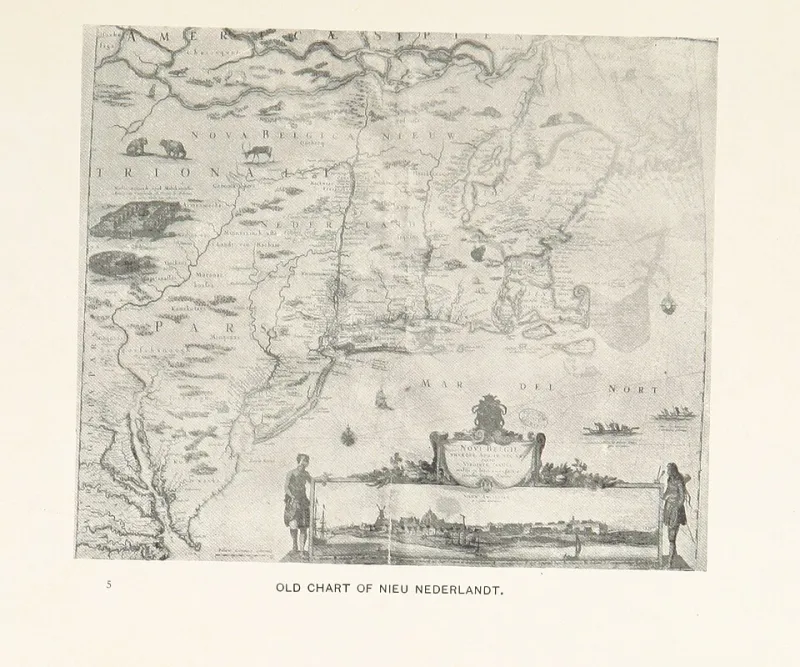
Photo: The British Library, No restrictions, via Wikimedia Commons
A place name is a small public archive. It records a moment of contact between languages, often under conditions of unequal power. The United States is especially rich in such archives: Indigenous names, colonial spellings, translated Spanish missions, and French trading posts all survive in the ordinary addresses of daily life. Some of these names are well known; their histories are not.
What follows is not a list of curiosities. It is a linguistic stratigraphy. Each name preserves a word from a community that shaped a place, even when later arrivals changed the pronunciation, the spelling, or the story of what the word meant.
1. Manhattan (Lenape)
Before Manhattan was a borough, it was an island named in Munsee Lenape, an Algonquian language. The Dutch recorded the name as Manahatta, and English kept a version of it. Popular etymologies include 'island of many hills' and 'place where we get bows,' referring to wood used for bow-making. The precise sense is debated, which is itself a reminder that colonial spellings often flattened distinctions the original language made.
The name outlived the Lenape-speaking communities that once controlled the island, but it did not outlive the Lenape people. That distinction matters. Place names can preserve a language even as the political history around that language is one of displacement.
2. Mississippi (Ojibwe, via French)
The Mississippi River takes its name from an Anishinaabe word often reconstructed as misi-ziibi, meaning 'great river.' French explorers and missionaries rendered it in French spelling, and English inherited that spelling. The pronunciation has drifted, but the structure is still visible: a French-shaped word carrying an Ojibwe root.
This is a common pattern in American toponymy. The name looks European on the page and sounds Indigenous in the mouth. The spelling is a colonial artifact; the word is older.
3. Massachusetts (Algonquian)
Massachusetts comes from Massachusett, an Algonquian language of the region. The name is often glossed as 'at the great hill' or 'on the range of hills,' referring to the Blue Hills near Boston. The colonial province adopted the name, and the state inherited it.
The etymology is a useful corrective to the idea that American names are transparently English. Massachusetts is not an English word with an English meaning. It is an Indigenous word that English speakers learned to pronounce and then used as a political label.
4. Brooklyn (Dutch)
Brooklyn is an anglicized form of Breukelen, a town in the Netherlands. The Dutch name is often explained as 'broken land' or 'marshland,' a reference to wet terrain. Dutch colonists brought the name to Long Island, and English speakers reshaped it in their own phonological mold.
Brooklyn is a reminder that American English is not only indebted to Indigenous and Spanish sources. Dutch colonialism left a durable layer in New York, from place names to words like cookie and boss. The borough's name is one of the most visible traces.
5. Los Angeles (Spanish)
Los Angeles is a shortened form of El Pueblo de Nuestra Señora la Reina de los Ángeles, a Spanish mission name meaning 'The Town of Our Lady the Queen of the Angels.' The Spanish article and plural noun survive in the English name, even though many English speakers no longer parse them as Spanish.
The name also preserves a religious and colonial geography. It was not chosen by the Tongva people who lived in the region before Spanish missionization. It was imposed as part of a settlement system, then carried forward into a global city.
6. Detroit (French)
Detroit comes from the French détroit, meaning 'strait.' The name refers to the narrow waterway between Lake Erie and Lake St. Clair. French settlers established a fort and trading post there in the early eighteenth century, and the French word became the city's name.
English pronunciation has moved away from the French, but the spelling still betrays the origin. Detroit is a French word in an American mouth, and its history is a reminder that the Great Lakes region was once a French colonial space as much as a British and American one.
7. Chicago (Miami-Illinois, via French)
Chicago is generally traced to a Miami-Illinois word often reconstructed as shikaakwa, referring to wild onion or garlic. French traders and missionaries wrote it down in various forms, including Chécagou. The popular story that the name means 'skunk' is a folk etymology, not the scholarly consensus.
The name is a particularly clear case of a plant word becoming a city word. The landscape that produced the name—prairie, wetland, and wild allium—has been largely transformed, but the lexical trace remains.
What These Names Teach
Language contact is rarely neutral. Names are imposed, translated, misspelled, and reclaimed. Some commemorate Indigenous presence; others commemorate the power that replaced it. Pronunciation matters for the same reason. To say Mississippi or Massachusetts with attention to their sources is not to perform expertise. It is to acknowledge that the land was named before it was mapped by later arrivals.
These seven names are not fossils in the sense of dead remains. They are living evidence of linguistic layering. They show that American English has always been a contact language, built from the words of people who were here, people who arrived, and people who stayed. The atlas is a linguistic document, and it is still being read.