Pictographs in the Prefrontal Cortex: What Emojis Reveal About the Brain's Evolving Language System
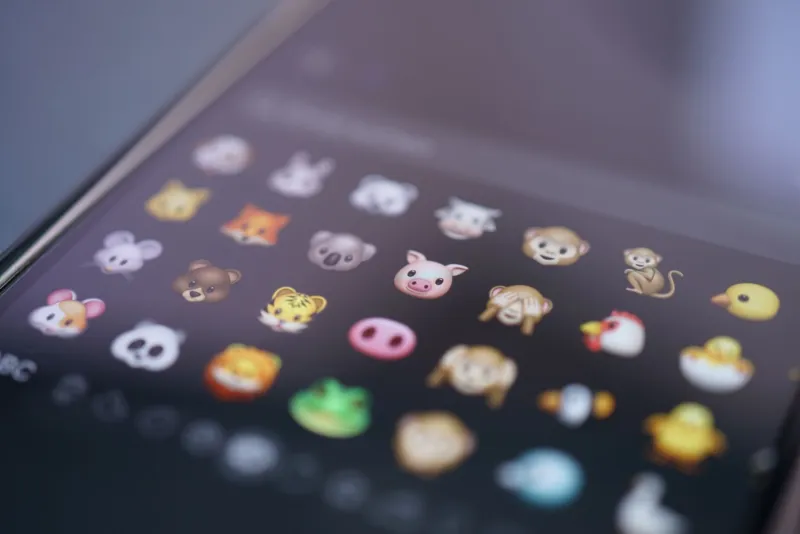
Somewhere between the invention of the alphabet and the release of Apple's first emoji keyboard, human beings quietly began constructing a second symbolic layer on top of written language. Today, more than 10 billion emojis are sent across digital platforms every single day in the United States alone. Yet for much of the past two decades, cognitive scientists treated these small pictographic icons as a curiosity rather than a legitimate subject of linguistic inquiry. That posture is changing rapidly, and what researchers are uncovering about how the brain processes emoji-embedded communication is reshaping foundational assumptions about language, meaning, and neural plasticity.
Beyond Decoration: Emojis as Functional Linguistic Units
The instinct to dismiss emojis as mere ornamentation—a digital equivalent of an exclamation point—misunderstands their structural role in contemporary communication. Linguists now broadly recognize that emojis function as paralinguistic markers, filling the gap left when tone of voice, facial expression, and gesture are absent from written text. In face-to-face conversation, roughly 55 percent of emotional meaning is conveyed through nonverbal channels, according to widely cited research by Albert Mehrabian. Digital text, stripped of those channels, is emotionally impoverished by design. Emojis, in this framing, are not embellishment—they are compensation.
What makes this neurologically interesting is that emojis do not behave like words. They do not follow morphological rules, they resist precise dictionary definitions, and their meaning shifts dramatically depending on cultural context, platform rendering, and conversational position. A 😂 placed at the end of a sincere statement can reverse its emotional valence entirely. This contextual sensitivity suggests that the brain is not processing emojis through the same pathways it uses for conventional lexical items—and the imaging data is beginning to confirm that suspicion.
Two Systems, One Message: The Neural Architecture of Hybrid Communication
Functional MRI studies conducted at institutions including Carnegie Mellon University and University College London have begun mapping the brain's response to emoji-laden text versus purely verbal messages. The results reveal a genuinely hybrid processing architecture. When participants read sentences containing emojis, researchers observe activation in the left-hemisphere language regions traditionally associated with syntactic and semantic processing—Broca's area and Wernicke's area—but also in right-hemisphere regions more commonly linked to visual processing and emotional interpretation.
Perhaps most strikingly, emotionally expressive face emojis appear to activate the fusiform face area (FFA), the same cortical region the brain deploys when recognizing human faces. This finding, first reported in a 2014 study published in Social Neuroscience by researchers at Flinders University in Australia, suggests that the brain has—over a remarkably short evolutionary timescale—begun treating a stylized digital circle as a social face. The implications are significant: if the FFA is engaged, then the emotional and social processing associated with genuine facial recognition may be partially recruited during emoji interpretation, lending these symbols a neurological weight that far exceeds their visual simplicity.
The Younger Brain and the Question of Structural Adaptation
The generational dimension of this phenomenon deserves careful scrutiny. Individuals who grew up with smartphones from early childhood—often designated Gen Z and the emerging Generation Alpha—have been immersed in emoji-integrated communication during the very developmental windows when language networks are most plastic. Whether sustained exposure during these critical periods produces measurable differences in how language is represented and processed in the brain remains an open and actively contested research question.
Some researchers, including developmental psycholinguist Vyvyan Evans at Bangor University, have argued that emojis constitute a genuinely novel form of language—one that younger users are learning not as a supplement to verbal communication, but as a partially autonomous system with its own pragmatic grammar. On this view, the brain of a twenty-year-old who has texted with emojis since age ten may have developed slightly different weighting between visual and verbal channels in social communication contexts compared to older adults whose linguistic scaffolding was built entirely on alphabetic text.
Critics of this position urge caution. Neural plasticity does not imply wholesale rewiring, and the core architecture of human language—rooted in the left perisylvian cortex—has demonstrated extraordinary stability across cultures and writing systems over thousands of years. The more conservative interpretation holds that emojis are expanding the range of inputs the language system processes without fundamentally restructuring it. The debate, in other words, is not yet settled, and that intellectual uncertainty is precisely what makes it worth tracking.
When Emojis Mislead: The Ambiguity Problem
The same contextual flexibility that makes emojis communicatively powerful also makes them a source of systematic misinterpretation. A 2022 study published in Computers in Human Behavior found that cross-generational emoji interpretation diverged significantly, with older adults frequently misreading the emotional intent of face emojis that younger respondents decoded accurately and consistently. Platform variation compounds the problem: the same emoji character renders differently on iOS, Android, and Windows systems, producing visual discrepancies that can alter perceived meaning.
From a cognitive standpoint, this ambiguity is instructive. It reveals that emoji comprehension is not purely perceptual—it is deeply inferential. The brain is not simply reading a symbol; it is constructing a probable meaning by integrating the symbol's visual features with conversational context, sender identity, platform norms, and cultural convention. This inferential burden places emoji processing closer to pragmatic reasoning—the domain of language that governs implied meaning and speaker intention—than to basic lexical retrieval. Understanding that distinction matters for educators, clinicians working with autistic individuals who may process social cues differently, and anyone designing communication systems for diverse populations.
What Emojis Are Teaching Us About Language Itself
There is a productive irony at the center of this research area. Emojis, which many academics initially regarded as a degradation of written language, are turning out to be a remarkably precise instrument for probing the architecture of linguistic cognition. Because they straddle the boundary between image and word, between emotional signal and syntactic unit, they force the brain to reveal the seams in its processing machinery—the places where visual and verbal systems hand off information, where context overrides form, and where social cognition and language cognition converge.
The story of emojis in the brain is, at its core, a story about adaptability. Human language has always evolved in response to new communicative technologies, from clay tablets to printing presses to touchscreens. What neuroscience is now documenting, in real time, is the brain's negotiation with a communication form that did not exist thirty years ago. Whether that negotiation produces lasting structural change or simply demonstrates the flexibility of existing systems, it offers a rare window into the mechanisms by which minds and languages reshape one another.
For researchers at the intersection of linguistics and cognitive science, that window is wide open—and the view inside is more complex, and more illuminating, than a simple yellow smiley face might suggest.