Velocity of Vernacular: How Platform-Driven Language Change Is Outrunning the Science That Studies It
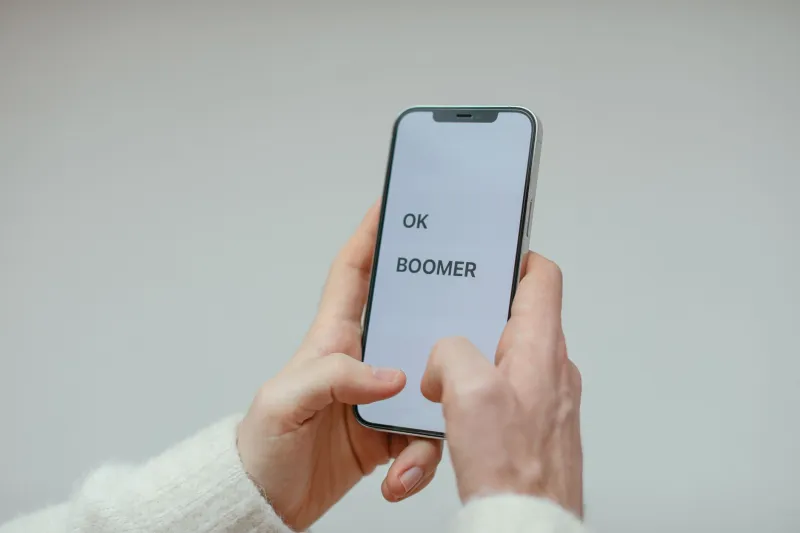
Traditional linguistics has always operated on the assumption that language change is gradual—the kind of shift that unfolds across generations and can be measured in decades. TikTok, Discord, and X have quietly invalidated that assumption. New slang, grammatical constructions, and semantic shifts are now emerging and achieving mass adoption within weeks, creating a documentation crisis for academic linguistics and a genuine cognitive challenge for anyone born before the smartphone era.
The Old Model of Language Drift
For most of recorded linguistic history, the mechanisms of language change were relatively well understood. Words entered a speech community through trade, migration, or cultural contact. They spread through face-to-face interaction, print media, and eventually broadcast television and radio. Lexicographers and linguists could observe a term percolating through a population over years, track its semantic evolution, and eventually codify it with reasonable confidence about its meaning and usage norms.
The Oxford English Dictionary famously required decades of collaborative correspondence before it published its first edition in 1884. Even in the twentieth century, new additions to major dictionaries were preceded by years of corpus evidence gathering. The system was slow, but it was thorough. The language it documented was, by the time of documentation, reasonably stable.
That model assumed something that the internet has fundamentally disrupted: a relatively uniform rate of linguistic diffusion constrained by geography and social proximity.
When Diffusion Becomes Instantaneous
TikTok's algorithmic architecture is, from a linguistic perspective, one of the most remarkable diffusion engines ever constructed. A video created by a teenager in Atlanta can reach twenty million viewers across every demographic and geographic stratum of the United States within seventy-two hours. Any novel phrase, syntactic innovation, or repurposed word embedded in that video travels with it—not passively, but actively, because the platform's engagement mechanics reward imitation, response, and variation.
The result is that lexical items which would once have taken a generation to migrate from a subcultural in-group to mainstream usage are now completing that journey in days. The term rizz, derived from the word charisma and initially circulating in small gaming and streaming communities, achieved widespread recognition and eventual entry into Oxford's word of the year consideration within a period that traditional linguistic diffusion models would find almost statistically impossible.
Discord has introduced an additional layer of complexity. The platform's server architecture creates thousands of semi-enclosed linguistic communities—gaming guilds, fan groups, political forums, hobby circles—each developing its own dense internal lexicon. These micro-dialects occasionally erupt into broader internet culture through memes and cross-platform sharing, introducing fully formed argots that outsiders encounter without the gradual contextual exposure that typically facilitates comprehension.
The Documentation Crisis
For academic linguistics, this velocity creates a genuine methodological emergency. Corpus linguistics—the field that analyzes large databases of real-world language use to identify patterns and changes—depends on systematic data collection, ethical review processes, and publication timelines that can stretch across years. By the time a peer-reviewed paper analyzing a particular internet linguistic phenomenon reaches print, the phenomenon in question may have already evolved through two or three subsequent iterations or disappeared entirely.
Some researchers have responded by developing real-time corpus tools that scrape public social media data continuously, but these tools raise significant questions about representativeness, consent, and the extent to which algorithmically curated content reflects actual population-wide usage. A word trending on TikTok is not necessarily a word in common use—it may be a word in common viewing, which is a meaningfully different thing.
The traditional gatekeeping function of dictionaries has also been strained. Merriam-Webster has accelerated its update cycles in recent years, adding new terms in quarterly batches rather than annual revisions. But even this pace lags behind platform-driven change, and the editorial judgment required to distinguish durable lexical additions from ephemeral internet noise remains as difficult as ever—perhaps more so, given the sheer volume of candidates.
What Neuroscience Reveals About Processing Speed and Age
The generational chasm in real-time language comprehension is not simply a matter of cultural familiarity or attentional preference. Neuroscience offers a more precise explanation rooted in how the aging brain processes lexical novelty.
When an unfamiliar word is encountered, the brain's left inferior frontal gyrus—a region centrally involved in language processing—engages in a rapid search for phonological and semantic neighbors. In younger adults, this process is supported by a more flexible and densely connected lexical network that can accommodate novel items with relatively low cognitive cost. In older adults, the lexical network is more consolidated around established entries, and the processing of genuine novelty—words with no existing neighbors—requires greater cognitive effort and produces higher rates of rejection or misattribution.
This is categorically different from the generational language gaps of previous eras. When baby boomers encountered the slang of the 1960s counterculture, those terms were embedded in a cultural context that was geographically and temporally accessible. The language changed, but it changed within a shared physical and social world. Today's platform-specific slang often emerges from communities that older adults have no organic access to and no intuitive frame for interpreting.
Research on semantic processing in middle-aged and older adults also suggests that the brain's efficiency in resolving lexical ambiguity—a core skill for navigating the ironic, layered, and context-dependent language of platforms like X—declines measurably with age. The phrase no cap, to take a simple example, requires the listener to suppress the literal meaning of cap and activate a slang interpretation that is entirely context-dependent. For brains habituated to resolving ambiguity through established contextual cues, this kind of suppression-and-substitution task is more demanding than it appears.
What This Means for Linguistics as a Discipline
The velocity problem forces linguistics to reckon with a fundamental question: what, exactly, is the discipline trying to document? If language is now changing faster than science can describe it, the traditional project of comprehensive lexical and grammatical documentation may need to give way to something more dynamic—a real-time, probabilistic model of linguistic state rather than a static archive of established usage.
Some computational linguists are already moving in this direction, developing models that treat language as a continuously shifting probability distribution rather than a fixed system. These approaches, borrowed partly from information theory and machine learning, offer a framework for tracking linguistic change as it happens rather than after the fact.
For the broader public, the practical takeaway may be more humbling. Language has always changed. What is new is the speed, and the speed is not incidental—it is a structural feature of the platforms that now mediate a substantial portion of human communication. Keeping pace is no longer simply a matter of cultural curiosity. It is a cognitive challenge that the science of language is only beginning to fully measure.